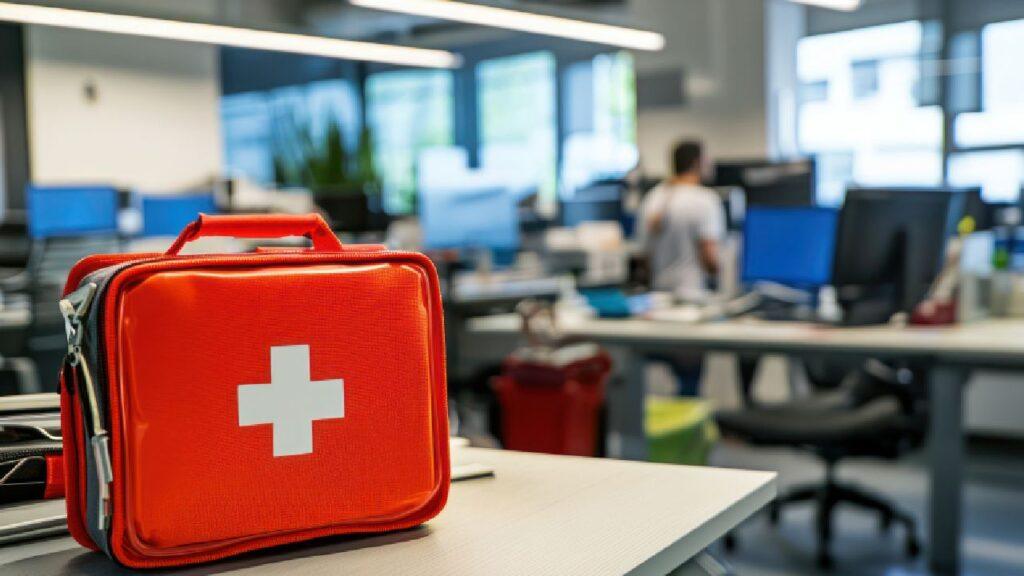
Each year, over 120,000 serious injury claims are lodged by Australian workers—many due to slips, trips, and strains in the most routine settings. Offices are no exception.
Emergencies don’t make appointments. Whether it’s a paper cut gone wrong, a slip in the breakroom, or a sudden allergic reaction, your team needs to be ready. That’s where an office first aid kit comes in.
Having the right supplies on hand can turn a chaotic moment into a controlled situation. If you’re responsible for office safety, ensuring your first aid kit is complete, accessible, and up to date is one of the simplest ways to show leadership and care.
What Should Be in an Office First Aid Kit?
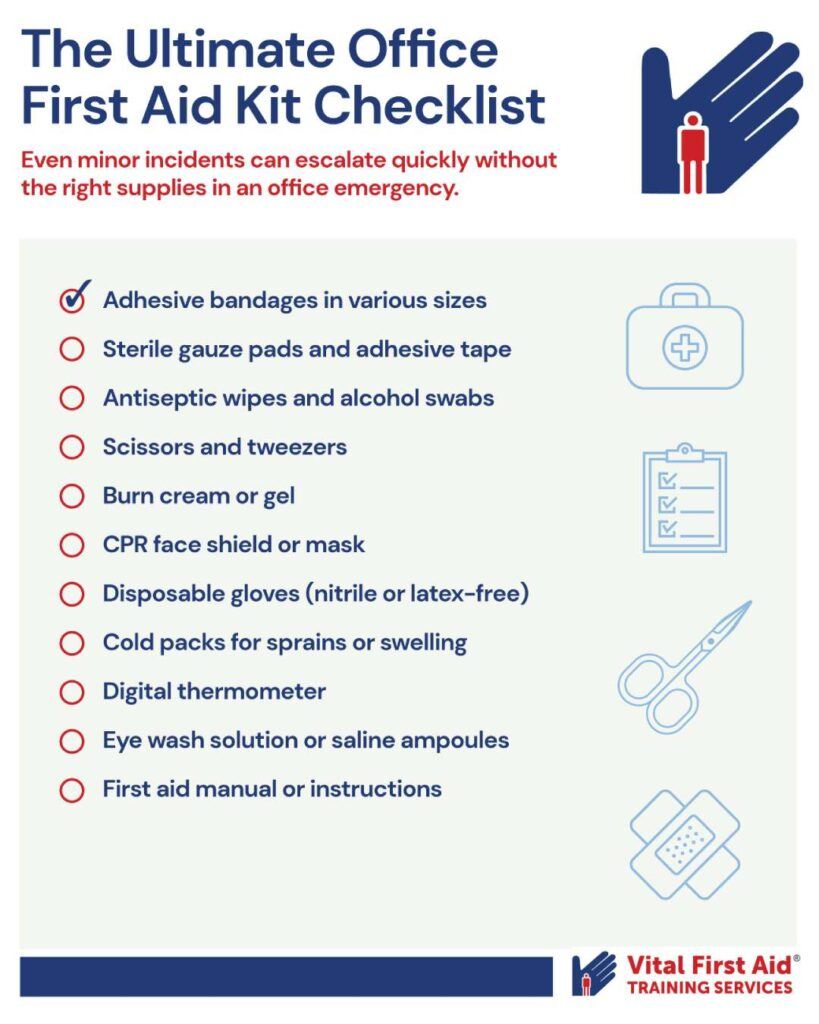
An office first aid kit should include adhesive bandages, antiseptic wipes, gauze pads, adhesive tape, scissors, disposable gloves, a CPR face shield, tweezers, a digital thermometer, burn cream, and a first aid guide.
Essential Items for Your Office First Aid Kit
When stocking your office first aid kit, think beyond the basics. A well-equipped kit should handle minor injuries and buy time during more serious incidents.
Here’s what to include:
- Adhesive bandages in various sizes
- Sterile gauze pads and adhesive tape
- Antiseptic wipes and alcohol swabs
- Scissors and tweezers
- Burn cream or gel
- CPR face shield or mask
- Disposable gloves (nitrile or latex-free)
- Cold packs for sprains or swelling
- Digital thermometer
- Eye wash solution or saline ampoules
- First aid manual or instructions
These essentials help you treat everything from paper cuts to sprained ankles. You don’t want to be rifling through a drawer when time is critical.
- Since the Covid pandemic, nearly 40% of Australians now work from home weekly (CEDA, 2024), making it essential to equip remote staff with a proper first aid kit for home offices to ensure safety. Read here for insight into First Aid for Remote Workers.
Tailoring Your First Aid Kit to Your Workplace
Not all offices are the same. A digital marketing agency may face different risks than a construction admin office. Consider your team’s environment and activities.
Think about:
- Allergy risks (include antihistamines or epinephrine if needed)
- Burn hazards near kitchenettes or machinery
- Travel kits for employees on the road
- Mental health items, like contact numbers for support services
Also, take stock of how many people are in your workplace. A 5-person office won’t need the same inventory as a team of 50.
Legal Requirements and Industry Standards
Workplace safety isn’t just a “nice-to-have”—it’s mandated. In Australia, Safe Work guidelines recommend minimum standards for first aid, which vary by industry and headcount.
Ensure your kit:
- Complies with Safe Work Australia regulations
- Is clearly labelled and easily accessible
- Has a responsible first aid officer assigned
- Is checked and replenished every 6–12 months
Failing to meet these obligations could result in fines or leave you liable in a workplace injury case. This is about more than compliance—it’s about your team’s trust.
Training: It’s Not Just What’s in the Kit
Even the best-stocked office first aid kit is only as effective as the people who use it. Equip your team with basic first aid training—it builds confidence and can genuinely save lives.
Encourage team members to:
- Attend accredited first aid training courses
- Understand how to respond to common injuries
- Know the kit’s exact location and contents
- Practice emergency drills quarterly
Picture this: A colleague faints during a meeting. Would your team know what to do? With the right training, hesitation turns into decisive action.
- First aid for fainting is critically important—read here for more information on what to do when someone faints.
Keeping It Updated: Don’t Let Supplies Expire
Imagine opening your kit during an emergency, only to find expired antiseptic or an empty box of gloves. It happens more often than you think.
Assign someone the responsibility to:
- Check the kit quarterly
- Replace expired items
- Restock after each use
- Log checks in a safety register
Regular maintenance turns your kit from a dust-covered box into a dependable safety resource.
- Workplace health and safety investigations are intensifying nationwide, with Australian businesses seeing more prosecutions and stricter penalties as WHS laws are progressively updated across states and territories. Learn more here.
First Aid Kits Reflect Your Culture of Care
Think about the impression your office leaves on new hires or clients. An updated, visible office first aid kit quietly signals that you take safety seriously.
It shows:
- You anticipate problems before they happen
- You value employee wellbeing
- You foster a professional, organised culture
People notice details—especially when they speak to care and responsibility. A dusty, half-empty kit? That sends the opposite message.
Real-World Scenarios: Why It Matters
Still think it’s a “just-in-case” item? Consider these:
- A delivery driver cuts his hand while unpacking—bandages and antiseptic stop the bleeding.
- A team member trips on a cable and twists her ankle—cold packs reduce swelling.
- Someone has an asthma attack—having a backup inhaler or spacer helps while waiting for paramedics.
These are real moments. A well-stocked, accessible kit turns panic into calm.
- An estimated 2.8 million Australians—11% of the population—reported living with asthma in the 2022 ABS National Health Survey. Read our article on Proven Ways To Fight Asthma During Winter
Final Thoughts: Is Your Office First Aid Kit Ready?
An office first aid kit isn’t just a compliance checkbox—it’s a safety net. In a world where health emergencies can arise in seconds, it gives you and your team peace of mind.
Take a moment today: check your kit, schedule a restock, and review your team’s first aid knowledge. Your workplace deserves more than a band-aid approach to safety—make your kit a symbol of preparation and care.
For more first aid tips or to learn more about first in an office environment, please get in touch. To enrol in a first aid course, register for a course near you.
Sources: Safe Work Australia ; CEDA ; Insurance Business ; Australian Institute of Health and Welfare