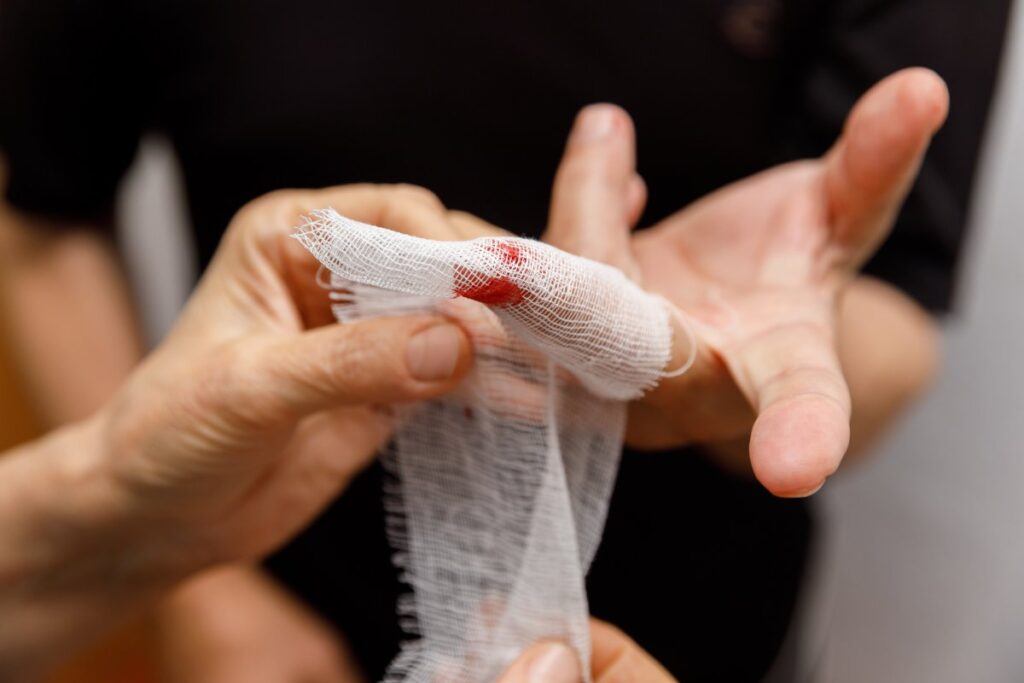
First Aid for Cuts
Picture this, you’re fixing something around the house. Then, in an instant, your hand slips. A sharp sting hits you, and as you look down, you see red. Panic sets in, your heart races and the world around you seems to blur.
It’s a situation no one expects, but knowing how to administer first aid for cuts can make all the difference. Acting quickly and calmly is key to stopping the bleeding, preventing infection, and promoting healing.
Explore this article
- Can Cuts Get Infected?
- Different Types of Cuts On The Body?
- The Most Common Causes of Cuts
- First Aid for Cuts
Can Cuts Get Infected?
Cuts can become infected if not treated properly. Bacteria may enter the wound within a few hours, leading to redness, swelling, and pus.
Symptoms of infection often appear within 24 to 72 hours. Immediate cleaning, applying antiseptic, and keeping the wound covered are crucial for preventing further issues.
Different Types of Cuts On The Body?
Cuts vary in severity and appearance, requiring different approaches to first aid. They can range from a minor scrape to a more serious injury like a deep cut to the head.
Here are common types of cuts on the body.
Abrasions
Scrapes caused by friction commonly occur on knees and elbows, hands and feet, or the head. Though shallow, abrasions need to be cleaned thoroughly to avoid infection, especially on the scalp.
Lacerations
Deep cuts are often caused by sharp objects like glass or metal. Lacerations, particularly on the head, may bleed heavily and often require stitches to close the wound properly.
Punctures
Small but deep wounds are often caused by sharp, narrow objects. Puncture wounds are prone to infection, so immediate cleaning and covering is essential.
The Most Common Causes of Cuts
Cuts can happen unexpectedly in everyday situations, often catching people off guard. Whether you’re in the comfort of your home or out in the wilderness camping, the risk of cuts is always present.
Here are some of the most common causes of cuts.
Accidents at Home
Many cuts happen while doing household chores, such as handling sharp knives, broken glass, or tools. DIY projects, gardening, and even cooking can lead to accidental cuts.
Falls
Falling onto sharp objects or rough surfaces can cause cuts. This is particularly common in children, the elderly, or people in an intoxicated state.
Animal Bites
Dog bites and other animal encounters often result in puncture wounds or cuts. Animal bite cuts are prone to infection if not cleaned properly due to the piercing wound allowing the bacteria on the animal’s teeth to penetrate deep into the body, bypassing the natural barrier of the dermal layers.
Workplace Injuries
Cuts are frequent in jobs involving machinery, tools, or heavy equipment. Construction sites, commercial kitchens, and manufacturing plants are common places for work-related injuries.
Sporting Accidents
Injuries during sports, particularly contact sports, can lead to cuts from falls or collisions with equipment or other players.
Car Accidents
Shattered glass from windows or windshields can cause severe lacerations during car accidents, often requiring medical attention.
Understanding the most common causes of cuts allows you to be more cautious and recognise when first aid for cuts might be needed.
First Aid for Cuts
The very first thing you must do is assess the severity of the cut. If the person (or yourself) are going into shock, or at risk of severe blood loss, call 000 immediately.
1. Wash Your Hands
Before attending to the wound, clean your hands thoroughly with soap and water to prevent introducing bacteria into the cut. If available, apply suitable gloves before touching the cut.
2. Stop the Bleeding
Apply gentle pressure with a clean cloth or sterile gauze to control bleeding. Elevate the injured area above heart level if possible. Minor cuts should stop bleeding within minutes, but deeper cuts may require more pressure and medical attention if bleeding continues.
3. Clean the Wound
Rinse the cut under clean, running water to remove dirt or debris. Avoid using harsh chemicals like hydrogen peroxide or alcohol as they can damage tissue and slow healing. .
4. Apply Antiseptic only if advised by a medical practitioner
After cleaning, apply a thin layer of antiseptic ointment to prevent infection. This step is particularly important for deeper cuts or wounds.
5. Cover the Cut
Use a sterile bandage, plaster, or gauze pad to cover the wound. Change the dressing daily or when it becomes wet or dirty.
6. Monitor for Infection
Check the cut for signs of infection, such as increased redness, swelling, pus, or warmth around the wound. If any of these symptoms appear, seek medical advice.
7. Seek Medical Attention if Needed
For deep cuts, large wounds, or those caused by animal bites or rusty objects, it’s important to consult a healthcare professional. Stitches may be required for deep lacerations, and tetanus shots might be necessary for certain injuries.
8. Take Pain Relief if Necessary
If the cut is causing discomfort, over-the-counter pain relievers such as paracetamol or ibuprofen can help manage the pain. Be sure to follow the directions on the packaging
Knowing How to Treat Cuts is Vital
Knowing how to treat cuts can make all the difference when accidents happen. From minor scrapes to more serious cuts, following proper first aid steps helps ensure a quick recovery and prevents complications like infection.
Vital First Aid offers a variety of courses that will equip you with the skills to provide first aid for cuts and other common injuries.