The Vital Facts
- Nearly 4,000 people were hospitalised due to a dog-related injury in Australia in 2013–14
- 90% of hospitalisations for people aged under 65 years were due to dog bites
- For adults, the most common body parts injured was the wrist or hand (42%), however for children aged 0–9, injuries to the head were more common (74%)
Source: AIHW
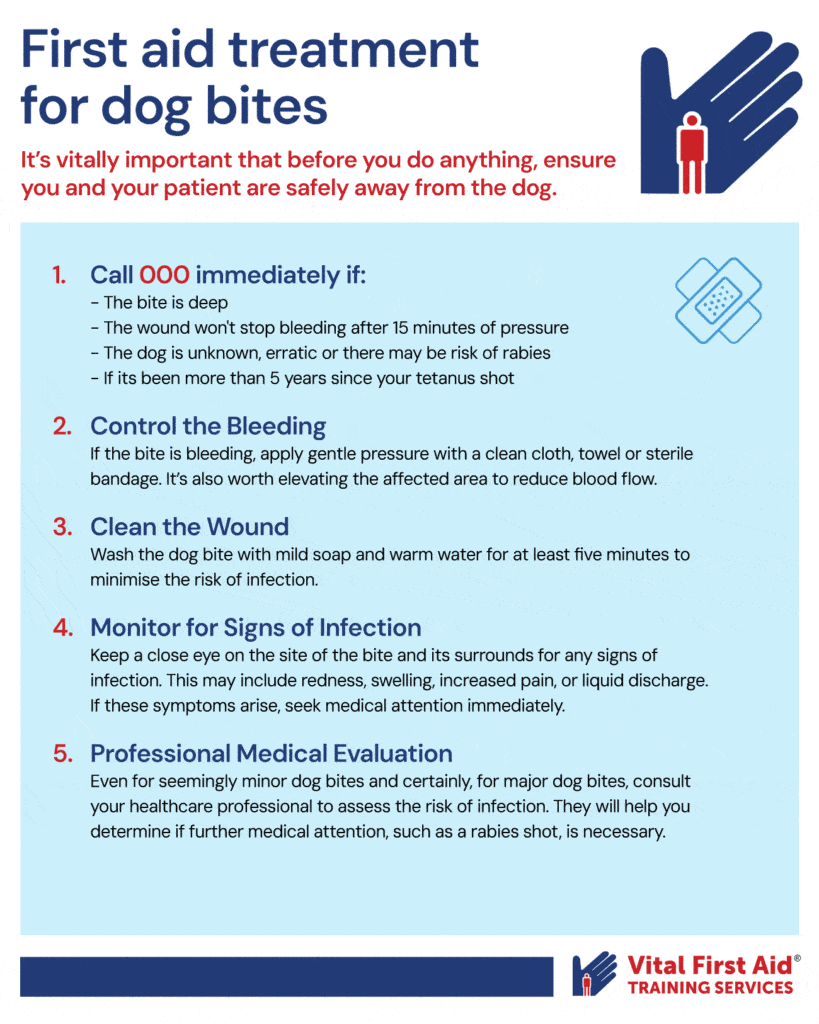
Immediate first aid treatment for dog bites:
- Call 000 immediately if:
– The bite is deep
– The wound won’t stop bleeding after 15 minutes of pressure
– The dog is unknown, erratic or there may be risk of rabies
– If its been more than 5 years since your tetanus shot - Control the Bleeding
- Clean the Wound
- Monitor for Signs of Infection
- Seek Professional Medical Evaluation
See here for more in-depth first aid treatment for dog bites.
Jump to a section in this article:
- How Dangerous Can Dog Bites Be?
- What to Do in a Dog Attack
- When to Call an Ambulance for a Dog Attack
- How to Provide First Aid for Dog Bites
- FAQ
- The Next Step: Complete a First Aid Course!
As much as you may love dogs, it’s crucial to recognise that some pups may not always be as friendly as they seem.
With their wagging tails and playful antics, most dogs are generally adored. However, it’s essential to approach them with caution, especially unknown dogs, as some can be aggressive, and their bites can pose a real danger.
Dog bit incidents are rare compared to the amount of fun-loving and playful interactions you have with them. But despite that, knowing first aid for dog bites is vital and being prepared to respond to a dog attack can ensure your safety and the safety of those around you.
In this blog, we’ll delve into the dangers of dog bites and equip you with the knowledge needed to react fast and effectively and provide first aid for dog bites.
From understanding the basic warning signs of an attack to knowing how to respond to an attack and administering first aid for dog bites, we’ve got you covered.
How Dangerous Can Dog Bites Be?
Dog bites can be much more serious than just being painful. Not only do dogs powerful jaws sometimes cause significant tissue damage, but they also carry a strong risk of infection due to the bacteria in their mouths.
Emotional trauma from a bite can linger as well so it’s vital to take caution in your interactions with these beloved animals.
What to Do in a Dog Attack
In the unfortunate event of a dog attack, staying calm and taking swift, decisive action is paramount to ensure your safety.
If an attack is imminent, you should avoid making sudden movements or direct eye contact, which may further provoke the dog.
A basic rule of thumb is to refrain from screaming or running, as this will often only escalate the situation. Also, running is generally not very effective given the speed of most dogs will be faster than your own. Instead, use a firm, authoritative voice to command the dog to “sit” or “stay”, provided you can do that safely.
If others are present, instruct them to stay still and avoid sudden movements as well.
If the dog attacks and you are knocked to the ground, protect your neck and head with your arms. Then, curl into a ball to minimise the area of your body that the dog can harm.
If and once the dog disengages, slowly and carefully back away without turning your back on it.
Then, seek prompt medical attention, even for seemingly minor injuries, and report the incident to local authorities to prevent future attacks. As a general rule, if the attack has broken your skin, even as a minor cut, you are at risk of an infection.
When to Call an Ambulance for a Dog Attack
There are two main instances where an ambulance should be called.
Mauling
If you or someone else has been mauled – where the injuries are severe or life-threatening – you should call an ambulance. Blood loss and shock can occur quickly so don’t delay.
Children
Small children are unfortunately more likely to be victims of dog attacks, as they are smaller, meaning even small dogs can pose more of a threat. Also, they may not be aware they are irritating a dog until it reacts aggressively.
Try to avoid allowing your child and dog to play unsupervised, and call an ambulance immediately if your child is mauled in a dog attack.
How to Provide First Aid for Dog Bites
During a dog attack, your first priority should be escaping the immediate danger rather than treating any injuries you or someone else has sustained.
So, before attempting any first aid, ensure you or the patient are safely away from the dog, eliminating the threat of further harm. Do not attempt first aid for a dog bite if the dog is still a potential danger.
Then, even if the injuries that were sustained seem minor, administer the following dog bite first aid protocols. This is because all dog bites can carry the risk of infection
1. Clean the Wound
Wash the dog bite with mild soap and warm water for at least five minutes to minimise the risk of infection.
2. Control the Bleeding
If the bite is bleeding, apply gentle pressure with a clean cloth, towel or sterile bandage. It’s also worth elevating the affected area to reduce blood flow.
3. Monitor for Signs of Infection
Keep a close eye on the site of the bite and its surrounds for any signs of infection. This may include redness, swelling, increased pain, or liquid discharge. If these symptoms arise, seek medical attention immediately.
4. Professional Medical Evaluation
Even for seemingly minor dog bites and certainly, for major dog bites, consult your healthcare professional to assess the risk of infection. They will help you determine if further medical attention, such as a rabies shot, is necessary.
Dog Bites: Frequently Asked Questions (FAQ)
1. How common are dog bite injuries in Australia?
In 2013–14, nearly 4,000 Australians were hospitalised due to dog-related injuries. Of these, 90% of hospitalisations for people under 65 were the result of bites. Alarmingly, for children aged 0–9, 74% of injuries were to the head, highlighting the particular danger for young kids.
2. How dangerous can a dog bite be?
Dog bites can range from mild to life-threatening, especially if they:
- Cause significant tissue damage due to powerful jaw pressure
- Lead to infection from bacteria in the dog’s mouth
- Cause emotional trauma, especially in children
Even a bite that appears minor can quickly become serious without proper care.
3. What should I do during a dog attack?
Stay calm and avoid sudden movements. Do not scream or run, as this can provoke the dog. Use a firm, commanding voice. If attacked, protect your head and neck, curl into a ball, and remain still until the dog retreats. Only seek first aid once the dog no longer poses a threat.
4. When should I call an ambulance for a dog bite?
Call 000 immediately if:
- There is severe bleeding or deep tissue damage
- A child has been bitten, especially on the head or face
- The bite is from an unknown or erratic dog (potential rabies risk)
- The victim shows signs of shock or unconsciousness
- It has been more than 5 years since a tetanus shot
5. What is the first thing to do after a dog bite?
Your top priority is removing yourself or the victim from danger. Once safe, begin first aid by:
- Cleaning the wound thoroughly with mild soap and water
- Controlling bleeding with a sterile bandage
- Elevating the injured area
- Monitoring for signs of infection
6. What are signs of infection after a dog bite?
Infection can occur quickly after a dog bite. Look out for:
- Redness, swelling, or warmth at the bite site
- Oozing or pus
- Fever or chills
- Increased pain over time
If these signs develop, seek medical attention right away.
7. Should I always see a doctor after a dog bite?
Yes. Even if the injury seems minor, a professional medical evaluation is highly recommended. A doctor can assess the need for:
- Antibiotics
- A tetanus booster
- A rabies vaccination (if the dog is unknown or unvaccinated)
8. What’s the difference between a bite and a mauling?
A bite may involve a single puncture or minor wound, while a mauling includes multiple or deep wounds, tissue damage, or severe bleeding. Maulings can be life-threatening and often require immediate emergency care and surgery.
9. Are children more at risk from dog bites?
Yes. Children are not only physically smaller, but they may not understand warning signs from dogs. This puts them at greater risk of head and facial injuries, which can be more serious. Always supervise young children around dogs, even if the dog is known to the family.
10. Can first aid training help with dog bite emergencies?
Absolutely. Completing a First Aid course equips you to stay calm and respond effectively in a dog bite situation. Training providers like Vital First Aid offer nationally recognised courses that cover bite treatment, infection control, shock management, and more.
The Next Step: Complete a First Aid Course!
You’ll immediately feel more comfortable and confident around our furry friends – especially since dog bites almost always happen unexpectedly.
If you want to ensure the safety of you and your family, you must have the knowledge and skills to confidently administer first aid for dog bites. Furthermore, in the case of a medical emergency, you must be able to respond until professional medical assistance is available.
At Vital First Aid, our qualified first aid trainers are highly skilled and experienced, and all first aid students will receive a First Aid Certificate on completion.
To benefit from our range of first aid courses, sign up here.