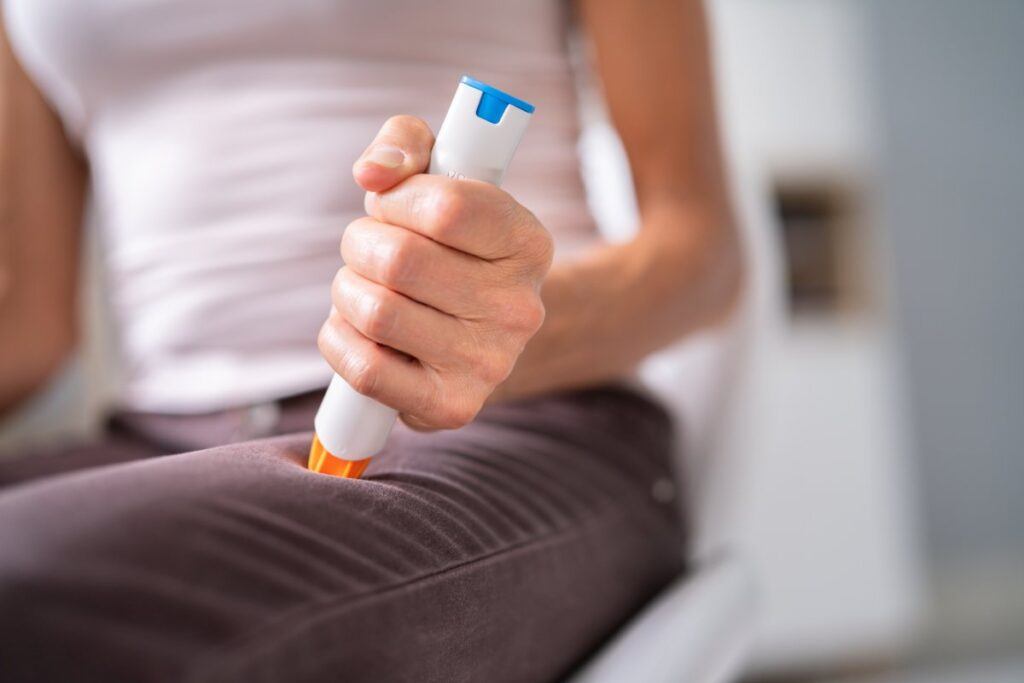
The Vital Facts
- Between 2015–16 and 2019–20, hospital admissions due to anaphylaxis increased by 35%, from 9,042 to 12,179 cases
- Australia records up to 20 deaths from anaphylaxis each year
The world seems to close in. Your throat constricted, each breath more desperate than the last. Your skin begins to swell, your heart pounds violently as the faces around you blur.
Anaphylaxis strikes fast, often without warning, and for many, it’s a life-threatening emergency.
Whether triggered by food, a sting, or something unknown, knowing how to provide first aid for anaphylaxis can save a life.
Here’s a summary of what you’ll find below:
- Immediate First Aid Treatment for Anaphylaxis
- What is Anaphylaxis?
- What Happens if Anaphylaxis Is Not Treated?
- Signs and Symptoms of Anaphylaxis
Immediate First Aid Treatment for Anaphylaxis
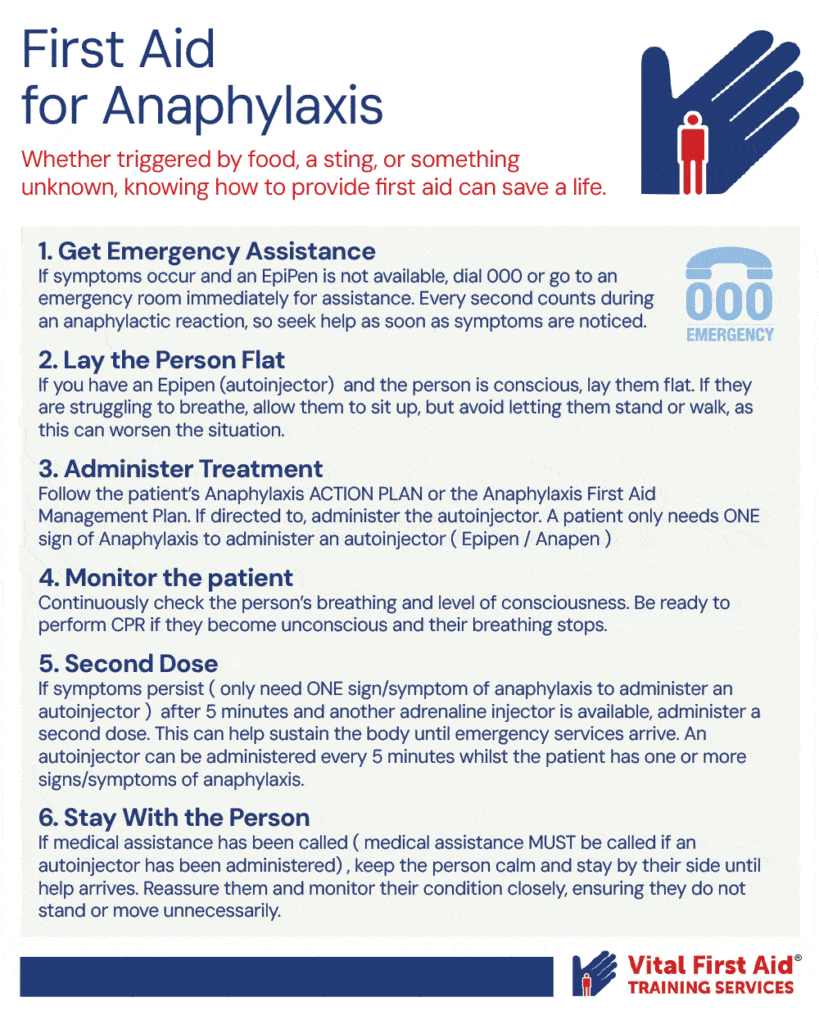
1. Get Emergency Assistance
If symptoms occur and an EpiPen is not available, dial 000 or go to an emergency room immediately for assistance. Every second counts during an anaphylactic reaction, so seek help as soon as symptoms are noticed.
2. Lay the Person Flat
If you have an Epipen (autoinjector) and the person is conscious, lay them flat. If they are struggling to breathe, allow them to sit up, but avoid letting them stand or walk, as this can worsen the situation.
3. Administer Treatment
Follow the patient’s Anaphylaxis ACTION PLAN or the Anaphylaxis First Aid Management Plan. If directed to, administer the autoinjector. A patient only needs ONE sign of Anaphylaxis to administer an autoinjector ( Epipen / Anapen )
4. Monitor the patient
Continuously check the person’s breathing and level of consciousness. Be ready to perform CPR if they become unconscious and their breathing stops.
5. Second Dose
If symptoms persist ( only need ONE sign/symptom of anaphylaxis to administer an autoinjector ) after 5 minutes and another adrenaline injector is available, administer a second dose. This can help sustain the body until emergency services arrive. An autoinjector can be administered every 5 minutes whilst the patient has one or more signs/symptoms of anaphylaxis.
6. Stay With the Person
If medical assistance has been called ( medical assistance MUST be called if an autoinjector has been administered) , keep the person calm and stay by their side until help arrives. Reassure them and monitor their condition closely, ensuring they do not stand or move unnecessarily.
What is Anaphylaxis?
Anaphylaxis is a severe, life-threatening allergic reaction that occurs rapidly after exposure to an allergen, such as certain foods, insect stings, or medications. It is the body’s immune system overreacting to a substance it mistakenly identifies as harmful.
Australia has the highest rates of anaphylaxis in the world, particularly in children, making awareness and prompt treatment essential to reducing the risk of fatal outcomes.
What Happens if Anaphylaxis Is Not Treated?
If anaphylaxis is not treated immediately, it can rapidly lead to serious complications, including difficulty breathing, a dramatic drop in blood pressure, loss of consciousness, and potentially death.
Without timely intervention with adrenaline (Epipen), the body can go into shock, and organ failure may occur.
What Causes Anaphylaxis?
Anaphylaxis is caused by exposure to allergens that trigger an extreme immune response. Common causes include:
- Food allergens: Such as peanuts, tree nuts (brazil nuts, cashews, and walnuts), shellfish, eggs, dairy, wheat and soy
- Insect stings: Venom from bees, wasps, and ants
- Medications: Certain medications, including antibiotics, aspirin, and nonsteroidal anti-inflammatory drugs (NSAIDs)
- Latex: Exposure to latex in gloves, balloons, or medical equipment
Signs and Symptoms of Anaphylaxis
Anaphylaxis symptoms can develop rapidly, usually within 5 to 30 minutes of exposure to an allergen, and can escalate to life-threatening levels if not treated immediately.
Some of the common signs and symptoms of anaphylaxis include:
- Difficult or noisy breathing
- Swelling of the tongue
- Swelling or tightness in the throat
- Wheeze or persistent cough
- Dizziness or fainting
- Abdominal pain, nausea, or vomiting following insect bite
- Difficulty speaking or a hoarse voice
- Pale and floppy ( young children )
Knowing What To Do Could Save a Life
Being prepared for an anaphylactic emergency means more than just carrying an EpiPen, it’s about knowing how to provide first aid for anaphylaxis when time is critical.
Ensure you’re ready to respond effectively. Sign up for one of our first aid courses to gain the skills and confidence needed to manage anaphylaxis and other emergencies.Contact us today for more information or register for a course near you.