The Vital Facts
- Out of all hospitalisations recorded in Australia due to contact with a venomous plant or animal, bee stings are the most common, accounting for 26%
- There are almost 1,000 recorded bee stings each year in Australia
- From 2000-2013, bee stings were the cause of 25 recorded deaths
If you need to treat a bee sting, follow these first aid steps immediately:
- Remove the stinger
- Wash the area
- Apply an ice pack
- Elevate the area
- If pain persists, go to hospital
See these first aid steps in more detail here.
Most Australians can recall a time when they were young and chasing vibrantly patterned bees around their backyard.
They can probably also remember the pain of the sting when that cute little bug turned out to not be very friendly.
For most people, that tough lesson was enough to stop playing with bees for good. But what if you have children of your own now, or you’re allergic?
The reality is, Australians are twice as likely to be hospitalised by a bee than any other type of venomous animal. Knowing how to provide first aid for bee stings is essential for Australians – and you can learn everything you need to know here.
Navigate guide:
- What Happens When a Bee Stings You?
- How Can You Treat a Bee Sting?
- What if I’m Allergic?
- Bee Serum Sickness
- FAQ
What Happens When a Bee Stings You?
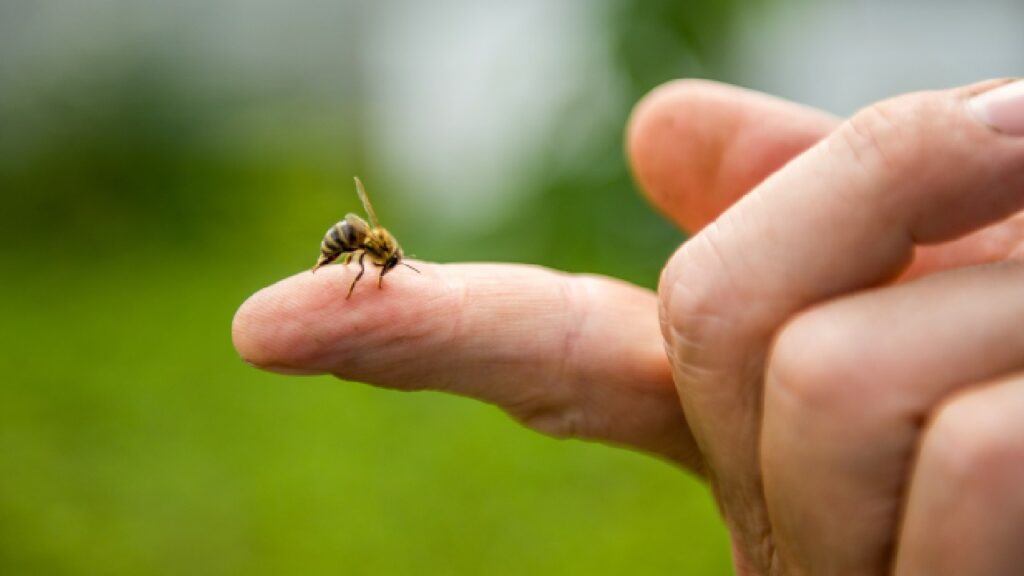
When a bee stings, its stinger is pulled from its body. Unfortunately for both of you, this means the stinger stays in your skin and continues to inject venom, while the bee itself dies.
The stinger acts like a needle that pierces your skin to create an entrypoint for the venom. This venom, known as an apitoxin, contains melitten which destroys red blood cells and causes the pain and swelling you feel when stung.
How Can You Treat a Bee Sting?
Before discussing the treatment of a bee sting, it’s worth mentioning that prevention is most effective. Bees are naturally placid, and won’t usually attack unless you interfere with them.
However, if getting a closer look at a hive is too irresistible and you get yourself stung, read on for treatment steps.
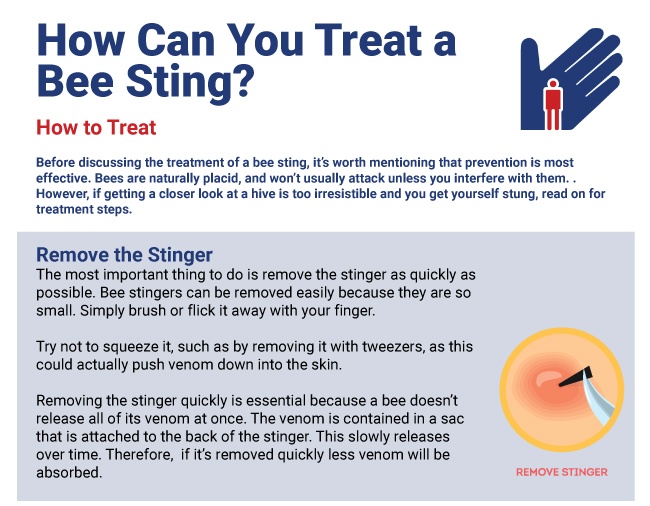
1. Remove the Stinger
The most important thing to do is remove the stinger as quickly as possible. Bee stingers can be removed easily because they are so small. Simply brush or flick it away with your finger.
Try not to squeeze it, such as by removing it with tweezers, as this could actually push venom down into the skin.
Removing the stinger quickly is essential because a bee doesn’t release all of its venom at once. The venom is contained in a sac that is attached to the back of the stinger. This slowly releases over time. Therefore, if it’s removed quickly less venom will be absorbed.
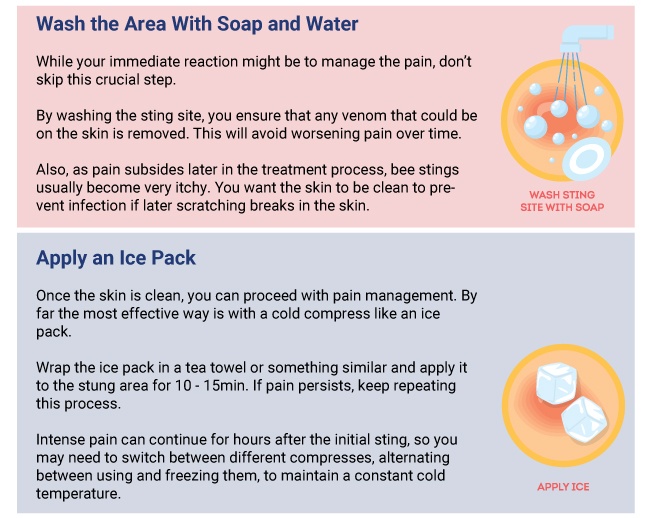
2. Wash the Area With Soap and Water
While your immediate reaction might be to manage the pain, don’t skip this crucial step.
By washing the sting site, you ensure that any venom that could be on the skin is removed. This will avoid worsening pain over time.
Also, as pain subsides later in the treatment process, bee stings usually become very itchy. You want the skin to be clean to prevent infection if later scratching breaks in the skin.
3. Apply an Ice Pack
Once the skin is clean, you can proceed with pain management. By far the most effective way is with a cold compress like an ice pack.
Wrap the ice pack in a tea towel or something similar and apply it to the stung area for 10 – 15min. If pain persists, keep repeating this process.
Intense pain can continue for hours after the initial sting, so you may need to switch between different compresses, alternating between using and freezing them, to maintain a constant cold temperature.
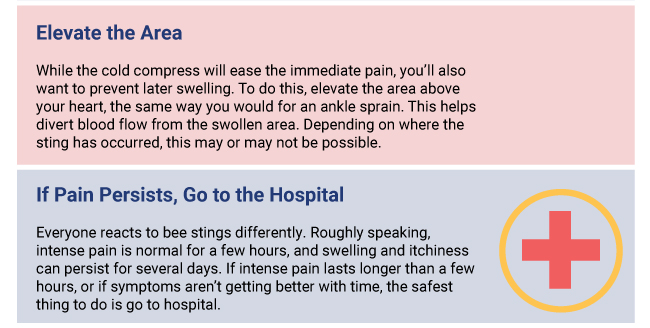
4. Elevate the Area
While the cold compress will ease the immediate pain, you’ll also want to prevent later swelling. To do this, elevate the area above your heart, the same way you would for an ankle sprain. This helps divert blood flow from the swollen area. Depending on where the sting has occurred, this may or may not be possible.
5. If Pain Persists, Go to the Hospital
Everyone reacts to bee stings differently. Roughly speaking, intense pain is normal for a few hours, and swelling and itchiness can persist for several days. If intense pain lasts longer than a few hours, or if symptoms aren’t getting better with time, the safest thing to do is go to hospital.
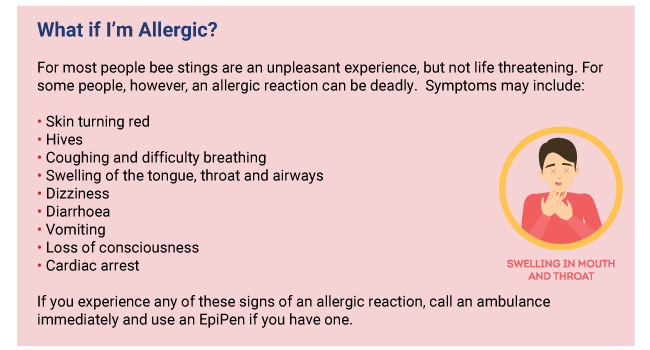
What if I’m Allergic?
For most people bee stings are an unpleasant experience, but not life threatening. For some people, however, an allergic reaction can be deadly. Symptoms may include:
- Skin turning red
- Hives
- Coughing and difficulty breathing
- Swelling of the tongue, throat and airways
- Dizziness
- Diarrhoea
- Vomiting
- Loss of consciousness
- Cardiac arrest
If you experience any of these signs of an allergic reaction, call an ambulance immediately and use an EpiPen if you have one.
Bee Serum Sickness
In very rare cases, you can develop bee serum sickness. This phenomenon occurs when your body reacts to the foreign toxin introduced by the sting. Bee serum sickness doesn’t present symptoms immediately. Instead, it occurs up to a week afterwards.
Symptoms include:
- Small rash that spreads quickly and can create skin lesions
- Swelling in the extremities and face
- Joint pain
- Fever
If you experience any of these symptoms, and don’t show signs of improvement within 48hrs, you should seek medical attention.
Bee Stings: Frequently Asked Questions (FAQ)
1. What happens when a bee stings you?
When a bee stings, it leaves behind its barbed stinger and venom sac, which continues to pump venom into the skin. The venom, known as apitoxin, contains compounds like melitten that break down red blood cells, causing pain, swelling, and inflammation. The bee dies shortly after stinging.
2. How common are bee sting injuries in Australia?
Bee stings are the most common cause of hospitalisations from venomous creatures in Australia, accounting for 26% of all cases. There are nearly 1,000 recorded stings each year, with 25 deaths reported between 2000 and 2013 due to allergic reactions.
3. What is the first thing I should do after a bee sting?
Remove the stinger immediately by brushing or flicking it off with your finger. Avoid using tweezers or squeezing the area, as this may inject more venom. The sooner it’s removed, the less venom your body will absorb.
4. What are the first aid steps for a bee sting?
Follow these five steps:
- Remove the stinger quickly and gently
- Wash the area with soap and water
- Apply an ice pack for 10–15 minutes
- Elevate the area to reduce swelling
- Go to the hospital if the pain is severe or persists for more than a few hours
5. How long does a bee sting usually hurt or swell?
Pain typically lasts a few hours, while swelling and itchiness can persist for 2–3 days. If symptoms worsen, don’t improve, or cause significant discomfort, it’s best to seek medical advice.
6. How do I know if I’m allergic to bee stings?
Allergic reactions vary but may include:
- Difficulty breathing or wheezing
- Swollen lips, tongue, or throat
- Dizziness or fainting
- Hives, nausea, or vomiting
If you experience any of these symptoms, call 000 and use an EpiPen if available.
7. What is bee serum sickness?
Bee serum sickness is a rare, delayed allergic reaction to bee venom. It can develop up to a week after the sting and causes:
- Spreading rash and skin lesions
- Facial or limb swelling
- Joint pain and fever
If symptoms persist for more than 48 hours, seek medical attention.
8. Should I go to the hospital for a bee sting?
Most people don’t need hospital treatment. However, go to the hospital if:
- Pain is severe and ongoing
- You were stung multiple times
- The sting is near the eyes or throat
- You have signs of a serious allergic reaction
9. Can bee stings be prevented?
Yes. Tips to prevent bee stings:
- Avoid disturbing hives or swarms
- Don’t swat at bees
- Wear shoes outdoors
- Avoid floral perfumes or bright clothing
- Teach children to observe bees from a distance
10. Is it worth taking a First Aid course to learn how to treat bee stings?
Absolutely. A First Aid course—like those offered by Vital First Aid—will give you the skills and confidence to manage insect stings, allergic reactions, and other emergencies calmly and effectively. Training is especially valuable if you or your family are active outdoors or live in high-risk areas.
Vital First Aid
Now that you have more confidence dealing with bee stings, have you considered developing a more well-rounded first aid knowledge?
Vital First Aid offer realistic training that will keep you calm and confident about your knowledge when faced with a stressful situation.
Feel more secure about your ability to help yourself and your family.
If you want to get serious about learning first aid, visit our website.