A day on the water is one of life’s great pleasures, but being prepared for potential emergencies is just as important as enjoying the journey. When you’re out at sea or even just offshore, access to medical assistance can be delayed, making a well-stocked boat first aid kit essential for safety.
In this guide, we’ll cover the ten must-have items every boat first aid kit should include. With the right supplies on board, you can handle minor injuries, manage unexpected medical situations, and ensure a safe return to shore.
What is a Boat First Aid Kit?
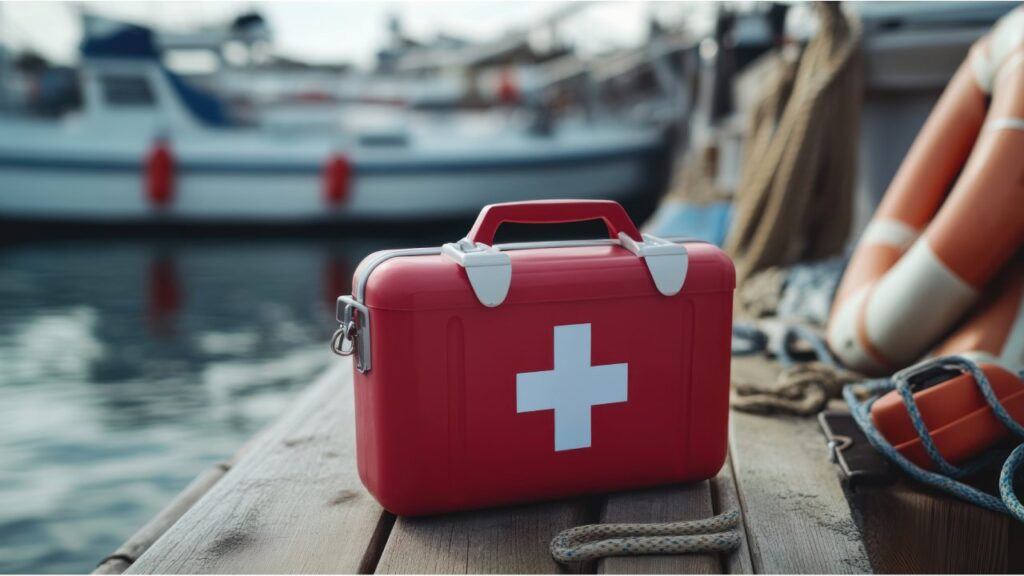
A boat first aid kit is a specially equipped medical kit designed for emergencies on the water. It contains essential supplies like bandages, antiseptics, seasickness tablets, and emergency tools to treat injuries or health issues until professional help is available. A well-stocked first aid kit ensures safety and preparedness for any boating trip.
10 Essential Items for Your Boat First Aid Kit
- Adhesive Bandages
Boating activities can lead to minor cuts and scrapes from fishing hooks, sharp equipment, or slippery decks. Adhesive bandages provide quick protection, preventing infection and promoting healing in a marine environment.
Tip: Choose waterproof bandages to ensure they stay secure even when exposed to splashes or humidity.
- Antiseptic Wipes and Ointments
Saltwater, fish handling, and marine debris can introduce bacteria into cuts and scrapes, increasing the risk of infection. Antiseptic wipes and ointments help clean wounds immediately, reducing the chance of complications in a damp, high-exposure environment.
Tip: Use antiseptic wipes before applying ointment and a waterproof dressing to protect against bacteria found in seawater.
Insight: Bacterium that occurs naturally in marine and estuarine waters throughout the world can be dangerous when coming in contact with wounds—learn more here
- Gauze Pads and Roller Bandages
Larger wounds from fishing accidents, slips on deck, or equipment mishaps need proper coverage to control bleeding. Gauze pads absorb blood while roller bandages keep them secure, preventing contamination in the marine environment.
Tip: Use waterproof or self-adhesive bandages to keep dressings in place despite moisture and movement.
- Elastic Bandages
Boating often involves moving on uneven, slippery surfaces, increasing the risk of sprains or strains. Elastic bandages provide crucial support, helping reduce swelling and stabilize joints until proper medical attention is available.
Tip: Learn proper wrapping techniques to provide stability without restricting circulation, especially in high-humidity conditions.
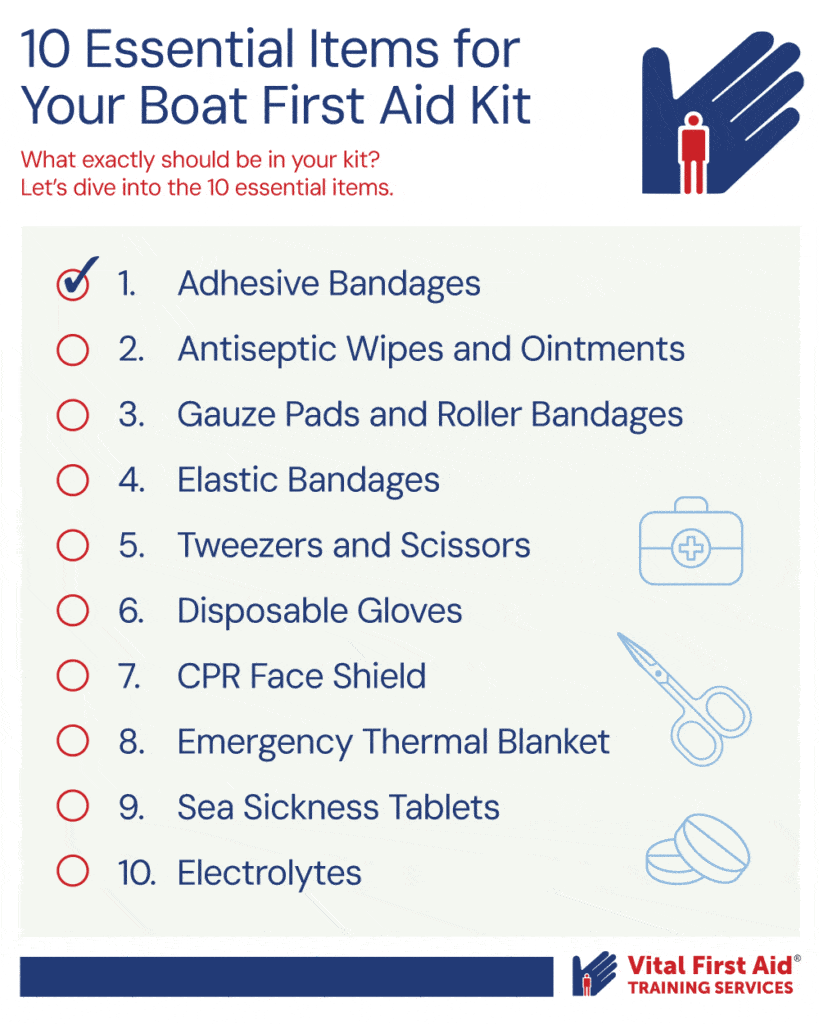
- Tweezers and Scissors
Fishing hooks, marine splinters, and sharp gear can lead to small but painful injuries. Tweezers remove embedded debris safely, while scissors are essential for cutting tape, clothing, or bandages in an emergency.
Tip: Choose stainless steel, rust-resistant instruments to withstand the marine environment and prevent corrosion.
Insight: Fishing hook injuries are one of the most common injuries while boating. Learn more about what to do in the case of a hook injury HERE
- Disposable Gloves
Handling injuries in a wet, salty environment increases the risk of contamination. Disposable gloves provide a hygienic barrier, protecting both the caregiver and the injured person from infection and cross-contamination.
Tip: Choose non-latex gloves to accommodate individuals with latex allergies and store them in a dry, sealed container.
- CPR Face Shield
If someone onboard experiences respiratory distress, a CPR face shield provides a protective barrier, ensuring safe and effective mouth-to-mouth resuscitation without direct contact.
Tip: Familiarise yourself with CPR techniques and keep the face shield easily accessible in case of emergencies.
Insight: Wherever you are, knowing what to do in the case of a heart attack is vital—read more here
- Emergency Thermal Blanket
Exposure to wind, wet clothing, and unexpected weather changes can lead to hypothermia. A thermal blanket helps retain body heat, keeping someone warm until they reach safety.
Tip: Store the blanket in a waterproof bag to ensure it’s dry and ready for use when needed.
- Sea Sickness Tablets
Motion sickness can cause nausea, dizziness, and vomiting, making it difficult to stay hydrated and alert on the water. Sea sickness tablets help prevent or relieve these symptoms, allowing for a more comfortable journey.
Tip: Choose non-drowsy options for daytime use and store them in a waterproof container to prevent damage.
- Electrolytes
Prolonged sun exposure and physical exertion can lead to dehydration, fatigue, and muscle cramps. Electrolytes replenish lost fluids and essential minerals, preventing heatstroke and keeping energy levels stable.
Tip: Keep single-use electrolyte sachets or dissolvable tablets in your kit for easy mixing with water.
Additional Boating Safety Essentials
Beyond a boat first aid kit, safety measures like sunscreen to avoid sunburn, properly fitted life jackets, a VHF radio, and hydration are essential. A waterproof flashlight and basic emergency knowledge further enhance preparedness. Visit AMSA for official safety guidelines.
Be Prepared for a Safe and Enjoyable Boating Experience
Having a well-stocked boat first aid kit isn’t just a precaution—it’s a necessity. When you’re out on the water, access to medical help can be delayed, making it essential to have the right supplies on hand.
Whether it’s treating minor cuts, managing motion sickness, or handling more serious injuries, being prepared allows you to focus on what truly matters—enjoying your time on the water with confidence.
If you have any questions about what to include in your boat first aid kit, feel free to get in touch—we’re here to help you stay safe on every voyage.
Sources: AMSA ; Queensland Government ; Queensland Ambulance Service t Foundation ; Health Direct ; HRI ; National Library of Medicine ; NDSS