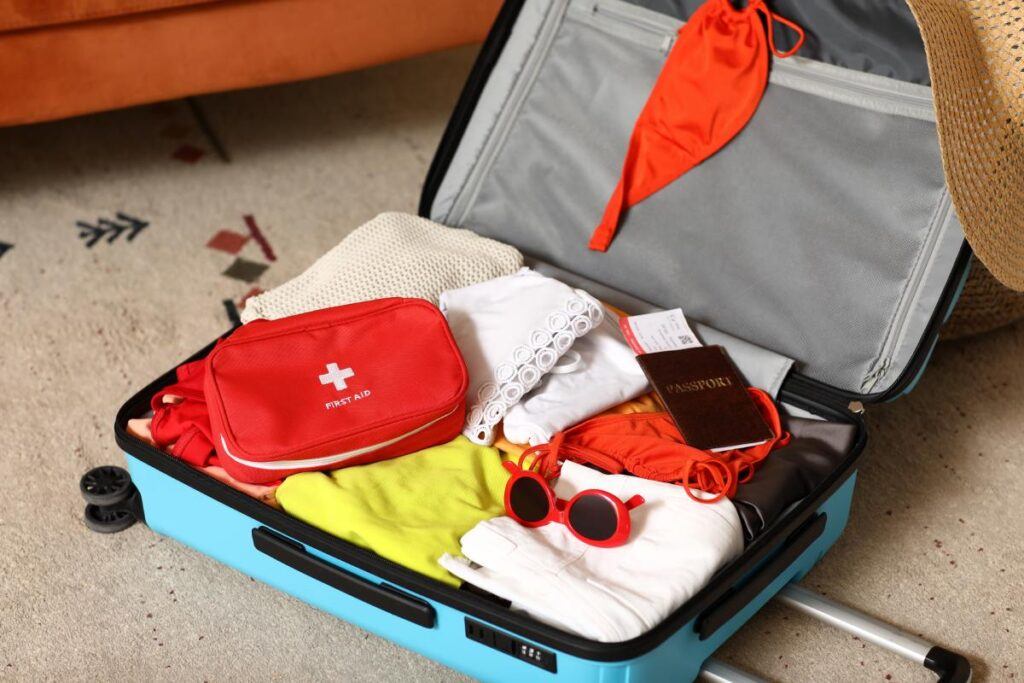
When you’re preparing for a holiday, the excitement of the adventure can sometimes make it easy to forget the essentials. With so much to pack and plan, a travel first aid kit often doesn’t make it onto the checklist.
Unfortunately, it’s only when a minor injury or health issue arises that the importance of having one becomes clear—potentially turning your dream trip into a stressful and dangerous experience.
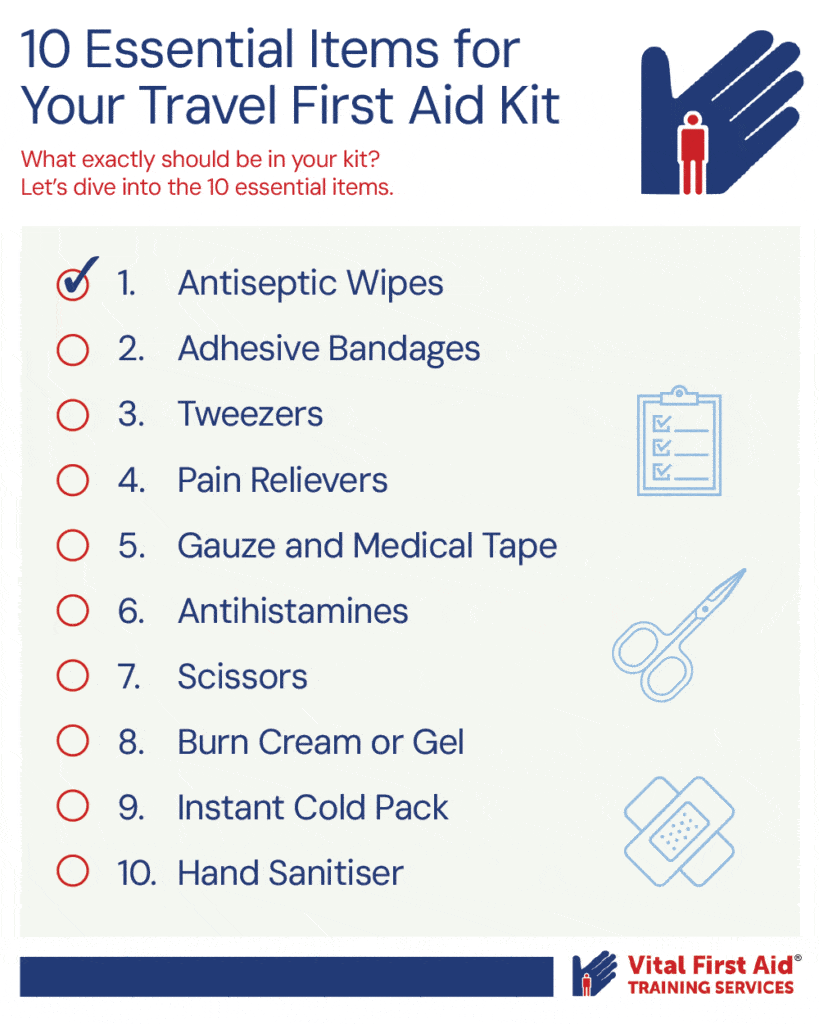
But what exactly should be in your kit? Let’s dive into the 10 essential items every traveller should carry in their first aid kit.
What Should Be Included in a Travel First Aid Kit?
A well-prepared travel first aid kit should include basic medical supplies to address common issues like cuts, burns, and allergic reactions. Essentials such as antiseptic wipes, bandages, pain relievers, and tweezers are also vital for treating minor injuries and ensuring your safety while travelling.
1. Antiseptic Wipes
Minor injuries while travelling are very common. But while they might not seem serious at the time, the potential of infection is more threatening.
Antiseptic wipes are crucial for cleaning cuts, scrapes, or insect bites to prevent infection. They are compact, easy to pack, and versatile, making them a must-have in any travel first aid kit.
Learn more about cleaning wounds.
2. Adhesive Bandages
No travel first aid kit is complete without an assortment of adhesive bandages. Whether you’ve got a small blister or a minor cut, adhesive bandages come to the rescue, offering quick and easy protection. Opt for various sizes to accommodate different types of wounds.
Tip: Choose waterproof adhesive bandages to ensure they stay in place during activities like swimming or hiking in humid conditions. They’ll last longer and provide better protection, even in tough environments.
3. Tweezers
Packing a good pair of tweezers is a travel essential. Splinters, or even small pieces of glass can become painful nuisances if left untreated. With a pair of tweezers, you can easily remove foreign objects from your skin or wounds without hassle.
4. Pain Relievers
Pain relievers like ibuprofen or paracetamol are must-haves. Travel can bring about headaches, muscle aches, or even fevers, so having over-the-counter medications handy ensures you’re prepared to handle discomfort.
Tip: Remember to include adult and child-friendly options if you’re travelling with family.
5. Gauze and Medical Tape
For larger wounds that adhesive bandages can’t handle, gauze and medical tape are essential items. They can be used to dress more significant cuts, helping stop bleeding and protecting the area from dirt and bacteria.
Make sure your travel first aid kit has a few sterile gauze pads and a roll of medical tape for emergencies.
6. Antihistamines
Whether it’s a surprise allergic reaction to food, pollen, or insect bites, antihistamines are a lifesaver on the road. These medications help alleviate allergy symptoms, such as itching, swelling, and sneezing, allowing you to continue your travels comfortably.
Tip: Opt for non-drowsy antihistamines to avoid feeling sluggish during your trip. These are ideal for daytime use and won’t interfere with your ability to explore and enjoy your adventure.
7. Scissors
Having a small pair of scissors in your kit is surprisingly handy. They can cut medical tape, gauze, or bandages and are also useful for trimming loose clothing that could irritate a wound.
Tip: Choose travel-friendly scissors with blunt tips that are less than 4 inches (10 cm) long. This ensures they comply with airport security regulations and won’t be confiscated at checkpoints.
8. Burn Cream or Gel
Accidents happen, especially when cooking outdoors when camping or dealing with hot surfaces. Burn creams or gels help soothe minor burns and prevent infection. Including this item in your travel first aid kit ensures you’re ready to treat burns quickly and effectively.
Learn more about assessing the severity of burns
9. Instant Cold Pack
For sprains, strains, or other injuries that cause swelling, an instant cold pack can provide immediate relief. Since cold packs don’t need to be frozen, they’re perfect for keeping in your kit while travelling. A quick shake is all it takes to activate the pack and begin reducing swelling and pain.
Tip: It’s often best to pack a cold pack in your checked luggage as some airport’s have specific rules about liquids and gels in carry-on luggage.
10. Hand Sanitiser
Staying clean and germ-free is a vital part of staying healthy while travelling. Hand sanitiser is a simple but powerful addition to your travel first aid kit. It ensures that your hands are free from harmful bacteria before treating wounds or eating, making it a valuable tool on the go.
The Importance of a Well-Stocked Travel First Aid Kit
Having these essential items in your travel first aid kit allows you to respond quickly to common injuries or illnesses while on the move. Being prepared can reduce the severity of medical issues and give you peace of mind, knowing that you’re equipped to handle emergencies until professional help is available.
Contact us for more information or register for a course near you.
Sources: Health Direct ; Healthline ; American Academy of Dermatology ; Smart Traveller ; Better Health